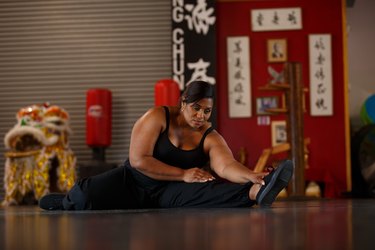
我担任健身教练八年。在此期间,我指导了许多肥胖客户。每个人都在另一个地方来找我。一些客户obesityare strong, exercise regularly and have minimal (if any) joint pain. Others are much more limited in their physical ability and may be dealing with multiple sources of chronic pain.
One thing I've noticed is that many people who have obesity worry about the long-term health of their joints. Although there is a correlation betweenobesity and eventually developing joint pain or disease,,,,there are steps you can take to reduce your risk or delay the onset of problems.
Video of the Day
I've seen plenty of anecdotal evidence that strength training can reduce the severity of existing joint pain and potentially delay the onset of new pain in my clients.
我也从个人经验中知道,减肥与力量训练相结合可以帮助减轻关节疼痛。早在2011年,我就有肥胖,膝盖和下背部疼痛。日常生活中的任务climbing stairsand sitting for long periods of time were challenging for me. I rode my bike and walked around my college campus but was otherwise inactive.
That year, I began an extended effort to lose weight. I started lifting weights and takingcardio classesat my campus gym. Slowly, as I got stronger and lighter, my pain began to subside. I no longer struggled to climb stairs or sit without back pain during long lectures. Eventually, once I had lost around 15 percent of my body weight, my pain went away completely.
While losing weight will certainly relieve pressure on your joints, people with obesity can also benefit greatly from focusing on exercises that build strength in the lower body and core. Targeting these areas will give your knees, hips, ankles and lower back some extra support, protecting them over time. The best specific exercises for you will vary based on your past training experience and history of pain (or lack thereof).
What the Science Says About Obesity and Joint Pain
大量的研究联系了肥胖 -疾病预防与控制中心(CDC) defines as having a body mass index (BMI) of 30 or higher — with joint pain and diseases, particularly osteoarthritis.
For instance, a December 2015 review inBMJ开放found obesity was a key risk factor for developing osteoarthritis in the knee. Osteoarthritis (OA) is the most common form of arthritis — which just means a group of diseases that cause joint swelling and inflammation. According to theArthritis Foundation,OA更为严重,肥胖者的进展更快,并且在超重或肥胖类别中患有BMI的人更有可能需要臀部或膝盖替代。
However, it's important to note that having obesity does not guarantee you will end up with joint pain or OA. Likewise, not having obesity does not mean you will never have to deal with joint pain or OA. All bodies are subject to the natural effects of aging, which causes bones and surrounding soft tissues — including the connective tissue in the joints, called cartilage — to wear down and weaken over time, says physical therapist凯文·林德(Kevin Linde),LPT。这意味着随着人们的年龄增长,他们可以期望与somejoint pain.
过去的运动损伤,炎症,遗传易感性和简单的衰老都会增加您患OA和其他关节疾病的风险。
But carrying around extra weight does put increased strain on the joints over time, which can increase the risk of OA, says马里兰州Vaishali Geib,弗吉尼亚州温彻斯特的内科医师。Geib博士补充说,下肢关节(臀部,膝盖和脚踝)以及下背部尤其处于危险之中,因为它们负责随着我们的移动而承担大量体重。
There's also evidence that excess fat in the body increases systemic inflammation, which further contributes to stiff, achy joints, according to theArthritis Foundation。This increased inflammation can also make the joints more likely to degrade and develop OA.
Losing even 5 to 10 percent of your body weight can help a lot with joint pain, according to Dr. Geib. You also might be able to delay joint problems by strengthening your muscles, bones and joints through some good old-fashioned resistance training.
运动如何减轻关节痛
运动 - 特别是抵抗训练 - 是减轻关节疼痛严重程度并延迟未来问题的良好工具。
Resistance training can help reduce knee pain from osteoarthritis, make daily activities easier and improve quality of life, according to a May 2012 article inPM&R: The Journal of Injury, Function and Rehabilitation。以及2008年9月的旧荟萃分析Arthritis Care and Researchfound resistance training can reduce pain and improve physical function in people with OA. Increased quad strength was especially important to counteract the effects of knee OA.
In general, strong muscles support whatever joints they're connected to, taking away some of the stress and pressure. For example, your quads are a major support system for your knees. When you jump, squat, run or do any other lower-body movement, your quads fire up and handle a lot of the work so that your knee joints don't have to.
Exercise also promotes the flow of fluid in the joints. This fluid carries nutrients that keep the cartilage (and the whole joint) healthy, Linde says. The cartilage itself doesn't have a blood supply, so it needs this fluid to get oxygen and other nutrients. When you load a joint, fluid filled with waste products squeezes out; when you relieve the pressure, nutrient-rich fluid seeps back in, according to the华盛顿大学。
However, it's crucial to find the right balance: If your knee is achy and already damaged, too much or the wrong type of impact can make things worse. You want just enough stress on the area to build the surrounding muscles and keep the joint moving in a healthy way.
4 Strength-Training Tips to Improve Joint Health With Obesity
If you want to use strength training to bolster your joints, here are four things you should focus on. Consider consulting with a trainer or physical therapist who has experience working with people with obesity.
1.专注于建立低体力
Lower-body joints — hips, knees, ankles, lower back — are most at risk for pain if you have obesity. Resistance training strengthens the supporting muscles around these vulnerable joints, providing greater stability, Linde says.
特别是,建造强壮的四边形,腿筋,臀肌和小腿可以帮助您的脚踝,膝盖和臀部移动更好,并吸收更多的力。
增强一个关节周围的肌肉也可以帮助看似无关的关节。毕竟,一切都连接了。例如,增强臀部的肌肉可以改善膝盖的疼痛,凯尔·费尔德曼(Kyle Feldman),DPT,,,,physical therapy director at ReShape, tells LIVESTRONG.com. "If your hips don't move well, your knees are highly affected," he says. "The whole extremity is a chain, and for best results we need to look at how things work together."
有助于建立力量和促进健康关节的低身运动包括:
2。Don't Forget About Your Core
Core strength is also crucial. The core helps support your every movement, and most importantly, protects your lower back.
Oftentimes, people with abdominal obesity compensate by arching — and straining — their lower back, Dr. Geib says. My coaching experience has shown me that clients with more core strength and stability are better able to reduce low back pain.
琳德说,肥胖症患者经常在过渡运动中挣扎,例如由于断开连接和核心弱点而在床上上下滚动。通过教人们如何使用低身肌肉,他如何瞄准这一点的一个例子and核心properly stand up from a chair: Hinge at the hips, engage the deep core muscles and use the legs to push and stand up without using the arms.
If you are able to从地板上下起来,尝试这些练习以建立更深的核心力量:
如果从地板上下起来太具有挑战性了,您仍然可以使用以下常规练习来建立更强大的核心:
- Anti-rotation(Pallof) press
- 农民的步行和单臂农民的步行
- Chop and lift
- 修饰的木板with hands on a box or chair
3。Modify Your Workout to Meet Your Fitness Level
无论您的体重如何,在做一次下蹲之前始终考虑任何医疗状况,当前的健身水平和运动经验。
If you have obesity, but don't have any current pain:我建议遵循full-body strength-training programusing exercises like squats and hip hinges, upper-body pushing and pulling exercises and core exercises. If your knees can tolerate it, building single-leg strength and stability using蹲下,,,,step-upsandlunges也可能有帮助。
Always prioritize good form — preferably under the guidance of a trainer or coach — before adding any free weights (like dumbbells or kettlebells). Once you feel comfortable with your program, focus on getting stronger by gradually adding load or difficulty.
If existing joint pain is affecting your workouts:修改可能会帮助您训练疼痛。理想情况下,您将与经验丰富的培训师一起工作,他们可以帮助您确定有效且安全的修改。
Here are some modifications I've used in my coaching practice:
- Use蹲下instead of lunges。
- Usesingle-leg glute bridge variations而不是弓步,下蹲或升级。
- Focus on building leg strength through posterior chain exercises like Romanian deadlifts and leg curls if knee-dominant exercises (like squats and lunges) are painful.
- 避免跳跃练习。
- 如果下地板或躺在长凳上是不切实际的,请使用座位和站立锻炼。
- Use machines if you need more support or if you want to be able to increase weight in small increments.
If you have obesity and intense joint pain or movement limitations:Aquatic exercise can be a great solution. When you work out in the water, the impact on your joints is much lower and you can move more freely. In fact, Linde, Feldman and Dr. Geib all recommend水基抵抗训练计划for their patients with obesity. You can start by practicing walking with high knees and moving your hips in different planes of motion.
4. Create Psychological Safety
知道运动的好处对于某些人而言,这只是现有痛苦的战斗的一部分。有OA或其他联合问题的人可能会发现自己被困在一个恶性循环中,他们需要更多地运动以改善健康状况,但害怕这样做是因为它很痛。此外,与OA和肥胖相关的心理健康挑战可能会使移动更具挑战性。
找到安全的运动形式至关重要 - 但是,无论是基于泳池的锻炼,在健身房的地板上举起还是完全取决于您。这是与可以向您展示绳索并给您形式反馈的培训师合作的另一个原因。建立对身体和您所做的运动的信心可以帮助您感到舒适并保持动力。
Finally, if you have obesity and joint pain, consider seeking additional care if you are able to do so. There may be other factors affecting your joints, and addressing them all will help you move with less pain for longer.
- Rheumatology: "Obesity and osteoarthritis, more than just wear and tear: pivotal roles for inflamed adipose tissue and dyslipidaemia in obesity-induced osteoarthritis"
- Pain Research and Management: "Obesity and Multisite Pain in the Lower Limbs: Data from the Osteoarthritis Initiative"
- Clinical and Experimental Rheumatology: "Osteoarthritis is a serious disease"
- PM&R: The Journal of Injury, Function and Rehabilitation: "Resistance Exercise for Knee Osteoarthritis"
- Arthritis and Rheumatism: "Strength training for treatment of osteoarthritis of the knee: A systematic review"
- Obesity: "Obesity and Pain Are Associated in the United States"
- Cochrane图书馆:“治疗膝盖和髋关节骨关节炎的水生锻炼”
- Cochrane图书馆:“臀部,膝盖或髋关节和膝盖骨关节炎的人的运动干预和患者信念:一种混合方法评论”
- BMJ开放: "Body mass index and risk of knee osteoarthritis: systematic review and meta-analysis of prospective studies"
- Arthritis Foundation: "How Fat Affects Osteoarthritis"
- 华盛顿大学: "Joints"