

When corn on the cob, the traditional summertime favorite, is not in season, you can still enjoy the same sweet corn by conveniently opening a can. Fresh and canned corn have similar nutritional benefits, which include antioxidants, carbs, protein and fiber. However, some disadvantages of eating sweet corn might arise from overindulging, causing you to experience gastrointestinal discomfort.
年代ource of Calories in Corn
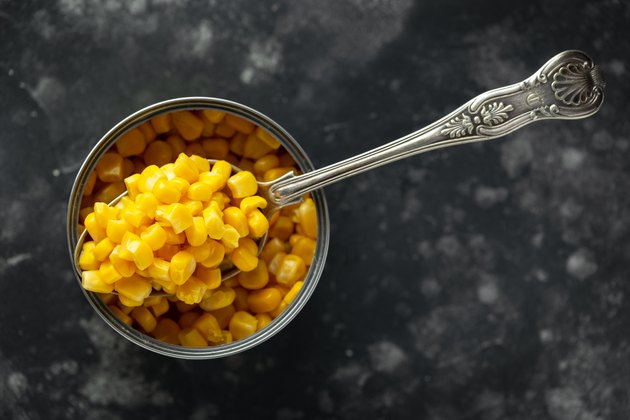
罐头sweet corn supplies67 caloriesper 100 grams. A 100-gram serving of corn is equal to about 2/3 of a cup or half of a can of corn.
Yourbody needs caloriesto provide the energy for many metabolic functions.Dietary Guidelinesrecommends 1,600 to 2,400 calories per day for adult women and 2,000 to 3,000 for men, depending on age.
Fat Content of Corn
Of the total calorie content in 100 grams of sweet, canned corn,15 percentcomes fromdietary fat. You should consume20 to 35percent of your daily calories from fat, and a serving of sweet corn supplies about 2 percent — with 1.2 grams. Of that fat, 1 percent issaturated fat. Sweet corn does not containcholesterol.
Carbs in Corn
The highest source of calories in sweet corn is fromcarbohydrates, at76 percent. The carbs in corn are healthycomplex carbohydratesthat benefit your body by providing fuel for your brain, heart, kidneys and nervous system_._ TheUSDArecommends that you consume at least130 grams每天的碳水化合物。年代weet corn offers14 gramsof total carbs per 100 grams, or about 5 percent of your daily value (DV).
Corn Provides Protein
Proteinplays a major role in benefiting your body, by building tissue, muscle, bone and blood cells_._ Adults should strive for46 gramsof protein daily for women and56 grams每日佛r men. Of the total calories in 100 grams of sweet corn, 8 percent come from protein. That equates to2.3 grams.
Read more:What Is the Nutritional Value of Corn?
Keeps Your Digestive System Healthy
年代weet corn provides2 gramsor 8 percent DV fordietary fiber. Fiber is the part of corn that your body can't digest or absorb. You may have seen evidence of this in your stool. This is normal and healthy, because that undigested cellulose helps keep your digestive system functioning properly.
By adding bulk,fiber helps food movesmoothly through your intestines and out of your body. By keeping you regular, fiber in sweet corn helpsprevent constipation,irritable bowel syndrome**, hemorrhoids,diverticulitis** and other gastrointestinal disorders.
A study published in theInternational Journal of Food Sciences and Nutrition在2019年得出结论,纤维的作用增加the volume and weight of the stool may play a part in helping to reduce the incidence of colorectal cancer. From the findings of the study, researchers suggested that adding 7 grams of fiber per day to your diet could reduce your risk of colorectal cancer by 8 percent_._
年代ide effect:Because of its high cellulose content, eatingtoo much cornor any other high-fiber food may cause gastrointestinal symptoms_,_ such as cramps, abdominal pain, gas and even constipation. Dietary fiber may also cause these symptoms with certain medical conditions that inhibit absorption, such as celiac disease or irritable bowel syndrome.Medical News Todaysays that digestive complaints may occur if you eat 70 grams or more of fiber_._ You can usually relieve any discomfort by increasing your fluid intake.
年代weet Corn Is Naturally Sweet
罐头sweet corn contains4.5 gramsofsugarin each 100-gram serving. That's less sugar than some other vegetables, such as canned beets, which have5.5 grams. The sugar in corn is a natural form. Unlike refined sugar, such as white table sugar, your body can easily convert natural sugar from corn intoglucose to use for energy.
Vitamin Benefits of Canned Corn
Each 100-gram serving of canned sweet corn contains a wealth of vitamins beneficial to good health. Corn contains almost all theB vitamins. Required for energy production, these water-soluble vitamins provide fuel for the proper functioning of your heart, cells, muscles and brain.
Theimportance of vitamin Bfor its active role in brain function is demonstrated by each vitamin's ability to be transported across the blood-brain barrier where it carries out the active role in neurochemical synthesis, according to a review published inNutrientsin 2016. The quantities of each of the B vitamins in a 100-gram serving of sweet corn are:
- Folate,36 micrograms
- Niacin, 1 milligram or 6 percent DV
- Pantothenic acid, 0.2 milligram or 2 percent DV
- 肋骨oflavin, 0.09 milligram or 5 percent DV
- Thiamine, 0.04 milligram or 3 percent DV
- Vitamin B6, 0.04 milligram or 2 percent DV
年代weet corn contains important antioxidants that help reduce your risk of chronic disease.Antioxidantsprotect your body from damaging harmful oxygen molecules called free radicals. Free radicals are byproducts formed by normal body metabolism such as digestion, but they may also come from pollutants in the air. Thevitamins that act as antioxidantsin sweet corn, per 100 grams, are:
- Vitamin C, 1.8 milligrams or 3 percent DV
- Beta carotene(视网膜的前兆,活动的形式vitaminA), 14 micrograms
Mineral Benefits of Canned Corn
Eating a half-can serving of sweet corn has many benefits for your overall well-being from the abundance of minerals it offers, including:
- Phosphorus, 46 milligrams or 5 percent DV
- Magnesium, 13 milligrams or 3 percent DV
- Potassium, 132 milligrams or 3 percent DV
- Manganese, 0.07 milligram or 3 percent DV
- Copper, 0.04 milligram or 2 percent DV
- Iron, 0.27 milligram or 2 percent DV
- Zinc, 0.32 milligram or 2 percent DV
- 年代elenium, 0.6 microgram or 1 percent DV
Watch the Salt
罐头甜玉米是钠含量高and contains 9 percent of your DV with 205 milligrams per 100-gram serving.
年代odium is necessary in your diet to help regulate your body's fluid balance. It plays a role in transmitting nerve impulses and maintaining muscle function. However, too much sodium can contribute to certain health issues.
TheAmerican Heart Associationsays limiting your salt intake to less than2,300 milligramsper day can help reduce your risk of kidney disease, stomach cancer, osteoporosis and heart conditions, including heart attack, stroke and heart failure.
年代ide effect:One of the disadvantages of eating sweet corn is the effect the sodium content may have on your heart. Too muchsodium in your bloodstream pulls water into your blood vessels, which increases their volume and subsequently may increaseblood pressure. Long-term high blood pressure can injure blood vessel walls and force the heart to work harder.
In addition, the extra water in your body can lead tobloating and weight gain,according to theAmerican Heart Association.
Contributes to Eye Health
年代weet corn is loaded withluteinandzeaxanthin, responsible for the characteristic yellow color of the kernels. Since your body cannot synthesize lutein and zeaxanthin, they must be supplied by your diet.
These two phytochemicals are specifically accumulated in the retina, protecting your eyes from blue light damage and helping you see clearly. A 2015 study published inArchives of Biochemistry and Biophysicsreported that, compared to most sources, yellow sweet corn is a particularly good source of zeaxanthin.
To evaluate the association of lutein and zeaxanthin on eye health, yellow sweet corn was used in a cohort study in 2017. The findings, published inNutrients, determined that food containing lutein and zeaxanthin, such as corn, may prevent or delay the progression of macular degeneration, which is the leading cause of blindness.
Helps Maintain a Healthy Weight
If you are trying to manage your weight, eating a serving of low-fat sweet corn may help. The high-fiber content in corn makes you feel full longer so helps curb hunger. This satiety effect may prevent overeating, helping you to resist the urge to snack between meals. If you can reduce your total daily caloric intake, it's easier to lose those extra pounds.
较低的血糖指数diet may also promote weight loss and help maintain weight. The glycemic index is a measure of the effect a carbohydrate-based food has on your blood sugar after eaten. Despite its sugar content, sweet corn ranks low to medium on the glycemic index—between55 and 60.
A rating of55 or lessis a preferred value because that food is digested and absorbed slowly and translates to less fluctuation in blood sugar. This limits the release of insulin. Insulin stimulates the storage of fat by encouraging your cells to absorb glucose.
A 2018 meta-analysis found that a diet consisting offoods high in fiber and carbohydrates but low on the glycemic indexwas associated with overall weight loss, reduction in fat mass and decrease in insulin resistance in overweight people. The results of the 16-year study, published in the journalNutrients, reported that this outcome was achieved without adding any exercise.
Read more:Is Corn Fattening?
年代trengthens Your Bones
Magnesiumis one of several minerals in canned corn that can benefit bone health. Your bones house about50 to 60 percentof the magnesium in your body. The magnesium in sweet corn contributes toincreased bone densityand reduces the risk ofosteoporosisin women after menopause, according toNIH.
Potassiumin sweet corn is also important for increasingbone mineral density. Being deficient in potassium can deplete the calcium in your bones, according to theInstitutes of Health. Your body also benefits from potassium for proper kidney and heart function, muscle control and nerve transmission.
Phosphorusin sweet corn is another element essential for bone growth. With85 percentof your body's phosphorus found in your bones in the form of calcium phosphate, not getting enough of this mineral can cause weak bones prone to disease.
Other nutrients found in corn that are beneficial to the health of your bones arecopper, iron and zinc, according toAmerican Bone Health. So open up a tin of corn and get going on building better bones.
Corn Allergy
罐头sweet corn is naturally gluten free, so it's safe if you're sensitive to wheat or have celiac disease.
年代ide effect: Although uncommon, an allergy to corn can develop if your immune system overreacts to a protein in corn or a corn-derived product. Somesymptoms of a corn allergy, which can range from mild to severe, could include:
- Vomiting
- 年代tomach cramps
- Indigestion
- Diarrhea
- Wheezing
- 年代hortness of breath, difficulty breathing
- Repetitive cough
- Tightness in throat, hoarse voice
- Weak pulse
- Pale or blue coloring of the skin
- Hives
- 年代welling, either of the tongue and/or lips
- Dizziness
- Confusion
According to theAmerican College of Allergy, Asthma and Immunology, life-threatening, anaphylactic reactions to corn-based products have been reported.
Cans and Canned Corn
Aside effectfrom canned corn may be the result of the can and not the corn.
A widely used toxic chemical — bisphenol A — known asBPAhas been linked to health concerns, including diabetes, obesity, heart disease and cancer. Despite the health hazard, BPA is still used in food cans in America. TheCenter for Environmental Health (CEH)cites a USDA warning that toxins in can linings can migrate to the food inside.
TheCEH studyin 2017 analyzed various cans from major retail chains and found 38 percent of cans tested used BPA and another 19 percent used linings containing PVC, a toxic substitute.
CEH cites that the National Institute for Occupational Safety and Health reports BPA exposure causes both reproductive disorders and genetic damage in lab studies using animals. In addition, findings were that early-life BPA exposures may increase the risk of breast cancer.
- Dietary Guidelines, 2015-2020: Appendix 2. Estimated Calorie Needs per Day, by Age, Sex, and Physical Activity Level
- Dietary Guidelines, 2015-2020: Appendix 7. Daily Nutritional Goals for Age-Sex Groups Based on Dietary Reference Intakes and Dietary Guidelines Recommendations
- International Foundation for Gastrointestinal Disorders: About IBS: Dietary Fiber
- Mayo Clinic Q and A: Diet, Lifestyle Choices Can Lower Risk of Diverticulosis Developing Into Diverticulitis
- International Journal of Food Sciences and Nutrition: Dried Fruit and Public Health – What Does the Evidence Tell Us?
- Medical News Today: How Much Fiber Is Too Much?
- Nutrients: B Vitamins and the Brain: Mechanisms, Dose and Efficacy—A Review
- American Heart Association: Get the Scoop on Sodium and Salt
- Archives of Biochemistry and Biophysics: Zeaxanthin Biofortification of Sweet-Corn and Factors Affecting Zeaxanthin Accumulation and Colour Change
- Nutrients: Lutein and Zeaxanthin—Food Sources, Bioavailability and Dietary Variety in Age-Related Macular Degeneration Protection
- University of Sydney: GI Foods Advanced Search
- University of Sydney: Not All Carbohydrate Foods Are Equal
- Nutrients: A Plant-Based High-Carbohydrate, Low-Fat Diet in Overweight Individuals in a 16-Week Randomized Clinical Trial: The Role of Carbohydrates
- National Institutes of Health: Office of Dietary Supplements: Magnesium
- National Institutes of Health: Office of Dietary Supplements: Potassium
- American Bone Health: Minerals for Bone Health
- American College of Allergy, Asthma and Immunology: Corn Allergy
- Center for Environmental Health: Kicking the Can?
- USDA National Nutrient Database: Beets, Canned, Drained Solids
- NutritionValue.org: Corn, Drained Solids, Whole Kernel, Canned, Yellow, Sweet