
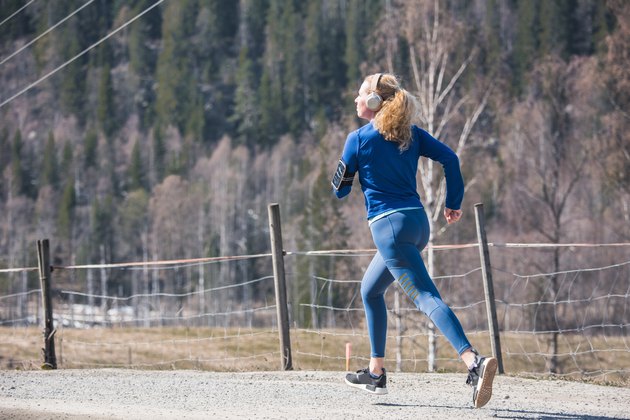
疝气也会严重破坏您的锻炼程序,即使这并不痛苦。在继续使用疝气之前,请咨询您的医生。可能发生的并发症远远超过您从练习中获得的好处。
Tip
根据您的受伤的严重程度和锻炼强度,用疝气奔跑可能会或不可行。在与疝气运动之前,请咨询医生,以帮助防止潜在的威胁生命的并发症。
阅读更多:与疝气运动
是疝气吗?
如果您怀疑自己可能有疝气,请去看医生进行评估。当肠道穿过腹壁衰弱的区域时,最常见于腹部纽扣或小腹腹股沟时发生疝气。
有时,这些伤害不太严重。您可能只有在增加腹部压力的活动中才会注意到凸起 - 咳嗽,跳跃或最初站起来。如果您的疝气不疼痛,您的医生可能会监测它。
If you're able to run without pain, you might be able to continue this activity, with your doctor's permission. However, the intensity of your workouts matter — strenuous exercise canmake a hernia worse.
疝气通常需要手术修复。未经治疗的疝气可能会导致勒死 - 您的肠子可能会被困,从而切断流向组织的血液。这可能是威胁生命的情况。
According to梅奥诊所,signs and symptoms of a strangulated hernia can include:
- 突然,迅速增加疼痛
- 发烧
- nausea
- 呕吐
- 被困的气体
- 便秘
- skin darkening (red or purple)
与疝气运动
Any type of exercise that increases pressure on your abdominal muscles can make a hernia worse. At first glance, it might be difficult to make the connection between running and your abdominal muscles. However, these muscles play an important role in running.
A small March 2018 study of 28 individuals, published byPLOS ONE,examined the effects of 12 weeks of Pilates training — core strengthening — on 5K running performance. The study showed activation of the abdominal muscles, particularly the obliques, during running. In addition, core muscle activation increased as running speed increased. Because running increases abdominal muscle contraction, running with a hernia can potentially make your condition worse.
运动可能对疝气的治疗有益,尤其是如果它很小。2012年2月发表的案例研究International Journal of Sports Physical Therapydescribes the successful rehabilitation of a professional hockey player who sustained a sports hernia injury during a game. Treatment occurred in three phases:
- 阶段1:疼痛管理和入门核心稳定练习
- Phase 2:进行性稳定和加强练习
- Phase 3:Functional training and return to the game
考虑保守治疗
如果您的医生确定可以在不手术的情况下治疗疝气,请考虑为腹部疝气进行物理疗法。物理治疗师可以为个性化的锻炼计划开出abdominal strengthening帮助防止症状恶化。锻炼专注于核心加强,而不会超过腹部受损的肌肉。
核加强疝气begins with learning how to contract the transverse abdominis — an abdominal muscle that helps support your low back and internal organs, according toexrx.net。One you've mastered this movement, called the abdominal draw-in, incorporate this maneuver into the other core strengthening exercises, described byPrinceton University Athletic Medicine.Perform each exercise 10 times, working up to three sets in a row. Stop immediately if you have pain.
移动1:腹部抽奖
- 躺在你的背上,膝盖弯曲,脚躺在地板上。
- Put your hand on your hip bones, spreading your fingers over the muscles on each side of your lower abdomen.
- 拧紧腹肌,好像您正在“绘制”腹部按钮以使其靠近脊椎。在整个运动中呼吸。
- 保持两到三秒钟,然后放松。
移动2:膝盖到胸部
- 执行腹部抽奖。
- Slowly lift one foot off the ground, bringing your knee in toward your chest.
- 下部向下,在另一侧重复。
移动3:脚跟滑
- 执行腹部抽奖。
- 沿着地面滑动右脚跟,拉直膝盖。
- 慢慢将脚跟向上滑向臀部。
- Repeat on the opposite side.
Move 4:Double Knee to Chest
- 执行腹部抽奖。
- Lift both feet off the ground at the same time.
- Bring your knees in toward your chest, keeping your low back pressed against the ground.
- Slowly lower back down.
Move 5:Bridge on Ball
- 躺在你的背上,膝盖弯曲。
- 将脚放在坚固的药球上。
- Perform an abdominal draw-in and maintain this throughout the exercise.
- 向下按脚,将臀部抬起,不超过三英寸。
- Hold for two to three seconds, then lower back down.
如果您的臀部侧面岩石或双腿开始动摇,则您的臀部过高。
Exercise After Hernia Surgery
如果您有疝气,最终您很有可能需要手术 - 尤其是如果您想保持积极的生活方式。根据National Institutes of Health,每年在美国进行800,000次疝气维修,这使其成为人们进行手术的最常见原因之一。
疝气手术后的运动遵循特定方案,该方案通常由医生或物理治疗师监督。核心肌肉损伤恢复时间通常需要12周才能完全恢复运动或运动活动。在疝气修复后,请按照外科医生的指示进行说明,以防止并发症。疝气修复后每两到四个星期,通常每两到四个星期进行练习,例如马萨诸塞州总医院骨科:
后阶段(0-2周):
- 步行15分钟,每天两次
- gentle lower extremity stretches
Intermediate Phase (2-4 weeks):
- 每天连续30分钟步行一次
- 固定骑自行车15分钟,到30分钟
- 以悠闲的速度游泳(切口得到治愈后)
- 温和的核心加强开始(腹部抽奖和进行)
- 加速
- ball squats
- 平衡训练(在不平坦的表面上扔球)
加强阶段(第4至8周):
- 固定自行车(进度抵抗和时间)
- 椭圆训练
- 以更高的强度游泳
- 步行/慢跑计划随着慢跑的进展(6周)
- 渐进的核心和下肢加强
Advanced Strengthening and Agility Training (weeks 8 to 10):
- 有氧设备的间隔培训
- progress jogging to running (avoid start/stops)
- lateral shuffles
- jumping activities
- 敏捷阶梯
返回体育活动(第10-12周):
- 特定于运动的演习
- 在合并开始/停止和方向变化时运行
- sprinting
返回休闲跑步
如果您不参加正式的体育活动,而是想在疝气手术后重新开始跑步,那就逐步进行。为了获得最佳结果,请遵循返回跑步计划,例如由校长在College of William and Mary,史蒂夫·科尔(Steve Cole),ATC,CSCS。
阶段1:Prior to attempting to run, work up to walking at 4.2 to 5.2 miles per hour — without pain — on a treadmill.
尽管正如科尔指出的那样,尽管跑步似乎并不是高强度的练习,但一英里的跑步由1,500英尺跌落,每只脚上有750英尺。请耐心等待,并缓慢建立耐力,以帮助避免术后并发症。
Phase 2:Perform a plyometric training program to get your body ready for high-impact running activities. Rest 90 seconds between each set and three minutes between each exercise.
- Hop in place on two feet — 3 sets of 30 reps
- 向前/向前/向后两英尺 - 3套30次重复
- Hop side to side on two feet — 3 sets of 30 reps
- 一条腿的啤酒花 - 每侧2套20次
- 一条腿上的前向/向后跳动 - 每侧2套20次
- 一条腿上的侧面啤酒花 - 每侧2套20次
- Single leg broad jump — 4 sets of 5 reps on each side
Phase 3:成功完成第1阶段和第2阶段后,开始该计划的步行/慢跑进程部分。您应该能够在没有痛苦的情况下完成所有日常活动,并能够触摸您的腹部而不会感到温柔。
Progress your walking/jogging in 5 stages. Stay in each stage until you can perform the prescribed activity without pain, and have no pain the following day. Run on a flat, forgiving surface — such as a racing track — as you begin to run again.
- 阶段1:步行5分钟,慢跑1分钟;重复5次
- 阶段2:步行4分钟,慢跑2分钟;重复5次
- 阶段3:步行3分钟,慢跑3分钟;重复5次
- Stage 4:walk 2 minutes, jog 4 minutes; repeat 5 times
- Stage 5:每隔一天慢跑,连续30分钟慢跑;从步行5分钟开始进行热身开始,然后在锻炼结束时步行5分钟即可冷静下来
Phase 4:根据您的个人目标进行运行计划。尝试每隔一天跑步八周。随着跑步频率的增加,请考虑缩短锻炼以帮助您的身体调整。在您的非运行日内纳入休息日或交叉培训。
当您在运行速度和整体跑步距离上工作时,请不要同时增加两者。这可能导致受伤。根据科尔的说法,在增加跑步的长度之前,您应该提高强度(跑步程度或快速)。随着您的强度增加,请考虑减少跑步的长度以使身体适应。
If your goal is to progress your running distance, increase total running mileage no more than 10 percent each week to help prevent injury.
- 马萨诸塞州综合医院:骨科:“双边运动疝修复和内收肌的术后康复指南”
- 梅奥诊所:“腹股沟疝 - 症状和原因”
- National Institutes of Health: "Battling a Bulging Hernia"
- PLOS ONE: "Pilates Training Improves 5-km Run Performance by Changing Metabolic Cost and Muscle Activity in Trained Runners"
- Oxford University Hospitals: "Physiotherapy Advice After Abdominal Surgery"
- Princeton University Athletic Medicine: "Lumbar/Core Strength and Stability Exercises"
- 威廉和玛丽学院:“返回跑步计划”
- exrx.net:“腹部横向”