你的骨骼系统有206块骨骼与肌肉的工作,让运动。该系统让您的身体它的形状和形式。体力活动的人一般具有较高的骨密度比不活动的人。你的骨骼系统响应喜欢锻炼你的肌肉。体力活动水平较高可能会降低你的年龄相关的骨质流失的风险。有规律的运动可以特别是在儿童,青少年和年轻成年人骨骼系统提供终身受益。
薄ne Mass
Your skeletal system stores 99 percent of the calcium in your body, and calcium is the most abundant mineral in your body. Your skeletal system responds to exercise by taking in more calcium. Osteoblasts are cells that bring calcium into bones. Osteoblasts slow down and transport less calcium from your blood to your bones during inactivity, but exercise has the opposite effect and increases osteoblastic activity. Exercise that requires force through a particular bone strengthens that bone. Exercise helps you increase the density and strength of your bones, especially exercising regularly during the first three decades of life.
Weight Bearing
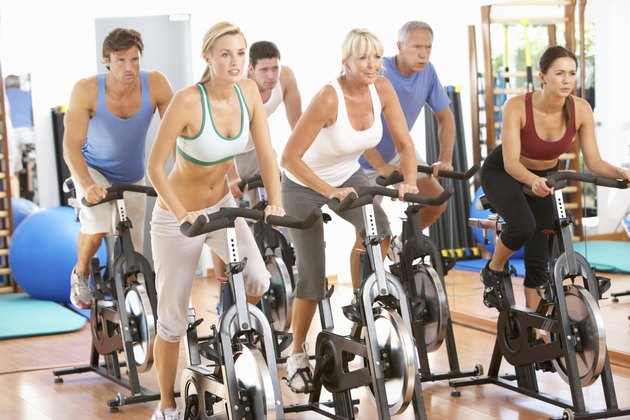
Your skeletal system responds to weight-bearing exercise more than nonweight-bearing exercise. Weight-bearing exercises include activities such as weightlifting, jogging, climbing stairs, tennis, and dancing. These exercises force your skeletal system to work against gravity. Nonweight-bearing exercises include swimming and cycling. Your skeletal system gradually loses bone mass after age 30. Therefore, performing more weight-bearing exercise before age 30 increases the amount of bone you can loose and may reduce your risk of developing problems with low bone density. Weigh-bearing exercise after age 30 may help you maintain bone density.
过度训练
Exercising too much may trigger negative responses from your skeletal system. You can lose bone density if you exercise too much and do not take enough calcium and vitamin D. Fluoride, iron, manganese and phosphorus are also important for healthy bones. Young women who exercise too much may not experience menstrual periods. This may indicate low estrogen levels, which may lead to brittle bones and osteoporosis. Weightlifting is generally healthy for young skeletal systems, but intense and heavy weightlifting, such as one-rep max workouts, may lead to injuries that damage growth plates in children and adolescents. Growth plate injuries can stunt normal growth.
Soft Tissue Support
Your skeletal system may become less susceptible to bone fractures in response to exercise, because exercise strengthens soft tissues that protect your bones. Physical activity, such as running, playing sports and plyometrics, increases your muscular coordination and balance. This reduces your risk of skeletal injury from falling, because your muscles adapt better to sudden obstacles and unstable surfaces. Muscle-building exercises reduce your risk of skeletal injury by increasing the size and strength of tissues that protect your bones.
- National Institute of Arthritis and Musculoskeletal and Skin Disease: Exercise for Your Bone Health
- Dr. Mirkin: How Does Exercise Make Bones Stronger
- University of New Mexico: Exploring the Mysteries of Exercise
- National Institute of Arthritis and Musculoskeletal and Skin Disease: The Skeletal Risk of Overtraining
- ExRx: Weight Training Safety Question & Answer
- Medline Plus: Calcium
- 薄ne Builders: Exercise