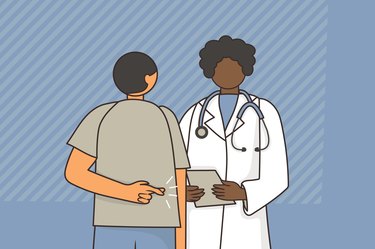

真的有多糟糕?将记录直截了当,您听到的所有习惯和行为可能是不健康的。
You're an upstanding and honest person, of course. Dig down deep, though, and you may recall that you've occasionally found yourself embellishing the truth or strategically omitting information at a doctor's visit.
Maybe you've upped how much you exercise, downgraded the number of alcohol you drink or claimed greater diligence with your meds than is strictly true.
当天的视频
With these kinds of fibs, you're far from alone. Based on his experience, "It happens quite often,"埃里克·迈克尔·阿切尔(Eric Michael Ascher),做纽约Lenox Hill医院的家庭医学医师告诉Livestrong.com。
Research backs this up.
Two national online surveys in November 2018 revealed it was common for people to deliberately hold back information from health care providers — such as whether they disagreed with the doctor's assessment, avoided exercise or hadn't taken medications as prescribed. For one survey, 81 percent of participants withheld information, while in the other, 61 percent held back, per the investigation inJAMA Network Open.
That's a majority of people who are visiting their doctors to maintain or improve their health, and not being fully forthcoming.
"In my clinical practice, it is hard to say if I've had as high a percentage [of fibs], but certainly, there have been patients who either told white lies or were very reluctant to share some information about their health," saysRod Tanchanco, MD, FACP和本书的作者First Patients.
那么这里发生了什么?我们与医生进行了交谈,试图解开为什么人们在大满贯时如此容易撒谎,以及潜在的后果是什么。
是什么激励人们躺在医生身上?
事实证明,人们对医生不太诚实的原因有很多不同的原因。这是一些:
- 你很尴尬。“他们可能对自己的病情的本质感到尴尬。”大卫·卡特勒(David Cutler),医学博士,加利福尼亚州圣莫尼卡的普罗维登斯圣约翰健康中心的家庭医学医师。或者,也许他们没有遵循医生的建议,但不想承认。Tanchanco博士说:“他们可能会很尴尬地承认指示尚不清楚,所以他们只会说一切都很好。”
- 您不想被审判。People may sometimes be avoiding a lecture. "Perhaps they did not take their medications as instructed, gained weight or for some reason failed to follow medical advice. Those are hard to admit," Dr. Tanchanco says. People can also be reluctant to be transparent about certain sexual activity or substance abuse.
- 你宁愿不知道。也许你有无保护的性行为。或者您很少活跃,或者不遵循健康的饮食。在JAMA调查中,不想听到有关行为的健康危害是不与医生共享信息的首要原因。
- 你有一个理论。Even before you're face-to-face with a doctor, you may have spent time — and lots of it — living with your symptoms, considering them and researching possibilities. This can lead to you having a sense of what's happening and why — and frame your conversation with a doctor to support that theory, Dr. Cutler says. "Facts which may seem inconsistent with their understanding may be excluded or altered. And irrelevant facts which seem important to the patient may get undue attention," Dr. Cutler says.
- You're a bit confused.Did you feel that pain first on Monday, or was it Sunday? Which came first: the rash or the fever? When you're not feeling well, recalling details can be tricky. It's less that you're fibbing to the doctor in this case, and more that you "may be confused about the timing, circumstances or significance of [your] experience leading up to a medical encounter," Dr. Cutler points out.
- You don't want to be a squeaky wheel.2018年11月,JAMA对FIBS的调查发现,患者经常出于不被视为困难的患者或占用过多的医疗保健提供者的时间而愿意共享信息。
Cutler博士说,人们FIB包括他们如何获得性传播疾病,物质使用以及对饮食或医疗方案的依从性的公共区域。
"During the pandemic we have seen people be untruthful about having had COVID-19 vaccines, remaining quarantined after COVID-19 exposure or adhering to masking mandates," he says.
But often, untruths are less direct.
People share information incompletely or incorrectly, Dr. Cutler says — understandable enough, if you consider that most patients aren't doctors, accustomed to detailing symptoms with precision.
"In the highly stressful environment of a medical encounter it is totally understandable that all the information provided by the patient may not be 100 percent true," Dr. Cutler says.
And sometimes, a lie can just seem expedient. Over at theAmerican Association of Medical Colleges, one of the JAMA researchers wrote about almost not sharing that she'd drank wine the night prior to surgery because she "dreaded trying to reschedule." (She did, ultimately, 'fess up.)
Who Fibs Most?
Based on the results in the JAMA surveys, there were three categories of respondents most likely to withhold information (note that the following is language used by the researchers):
- Women
- People who were young
- 健康状况不佳(基于慢性病或自我报告的健康状况不佳)
Caveats are in order. For instance, it’s worth noting that these results come from just two surveys, using only online samples, performed prior to the pandemic. And, as the researchers note, most participants were white.
2 Possible Effects of Lying to Your Doctor
While fibbing at the doctor's office is understandable, it's not without consequences.
1. You’ll Get Poor Medical Treatment
"The undesired consequence would be that care would be compromised," Dr. Tanchanco says.
Take for instance if you claim you're diligently taking a daily medication — but aren't actually doing so. This could happen for many reasons, Dr. Tanchanco notes, including being unable to afford the pills. But to your doctor, it'll look like the original medication isn't effective.
Tanchanco博士说:“患者的病情恶化,医生下令更多的药物,更多的测试,不知道患者实际上不遵守治疗计划。”他说,这不仅对您的健康不利,而且可能很昂贵,而且还可以吃掉时间。
That's just one example of how things go wrong. If you don't share a symptom — perhaps out of anxiety about what it might mean — you won't get treated, Dr. Tanchanco points out.
And instead of opening a conversation, fibs close it. When people aren't fully honest it doesn't "allow me to counsel them for healthier lifestyles," Dr. Ascher says. And it also could lead to missed screenings, he points out — for STDs or cancer and heart disease exams.
2.您可能有药物问题
"Patients should never lie about which medications they're taking," Dr. Tanchanco says. "This includes prescribed medications as well as lying about or not admitting to taking other substances that may be doing harm," he says.
Ascher博士说,饮酒也可能干扰药物。
并且不要坚持共享维生素和补品,这些维生素和补品也与某些药物和治疗相互作用。
Can a Doctor Tell if You’re Lying?
您掩饰真相的尝试可能不会欺骗任何人。
Ascher博士说,纤维的迹象可能包括缺乏眼神交流,肢体语言变化,视线或一般性地做出反应。
When that happens with patients, Dr. Ascher sometimes tries framing his queries differently. For instance, if he’s inquiring about drinking habits, he might provide a range to choose from — rather than requesting a number.
“If there is some clue that the patient is being untruthful, figuring out the underlying reasons would help,” Dr. Tanchanco says.
If it’s embarrassment or fear of being judged holding you back from full-throated honesty, take heart: Sometimes patients open up toward the end of a visit, Dr. Ascher says. They’ll say things like “I wasn’t going to say this” or “I’ve never told anyone this before,” he says.
但是从他作为训练有素的提供商的角度来看,患者共享的细节很少令人震惊。他说:“由于患者共享的那些事情,我们不会感到不舒服。”
如果您发现自己在纤维,请考虑获得新的医生
Talking about your health can be uncomfortable. Who wants to describe an unusual scent to their阴道排出, dig into a partner's infidelity or share intimate emotional details with a health care professional you may seeonly once a year(如果说)?
These things feel private, and maybe a bit awkward, too. Describing your family health history can feel weighty and sad.
但是,当您感到诚实时,与医生的最佳和最有效的关系发生了。
"Selecting a physician with whom you feel comfortable sharing personal information is critical to getting the best care," Dr. Cutler says. "In the end, the quality of the medical care you receive may largely depend on the quality of the information you provide to your physician," he says.
如果您不愿意和医生一起开放,那么您可能会有充分的理由。Tanchanco博士说,一些医生依靠行话,不断进行讲座或急忙。这不是识别的好环境。
Try these tips tofind a doctorwho is a good fit, Dr. Cutler suggests:
- 获取建议:Ask friends, family and colleagues for recommendations.
- 阅读评论:These can be helpful, Dr. Cutler says.
- Take a look at credentials:卡特勒博士说:“仔细审查医生关于其背景,教育和实践经验的证书可以帮助您选择一个看起来适合您的人。”
It's not that you'll get in trouble for lying to your doctor (and no, lying to a doctor isn't illegal). But you won't get good care. Most doctors — including the ones interviewed for this article — are eager for patients to feel like partners.
Ascher博士说:“我总是提醒我的病人,我不是在这里判断,我不是在这里讲课。我在这里与他们建立伙伴关系,因此我们可以培养更好的生活质量。”“我想帮助他们成功的医疗保健旅程。”
Related Reading
那么,对您的医生来说真的有多糟糕?
Ascher博士说:“这绝对取决于他们在融合什么。”
四舍五入锻炼的频率,不要提及错过的药物剂量或从每周的总数中淘汰一杯饮料可能没什么大不了的。
But some fibs can lead to health repercussions. Doctors may prescribe treatments that are ineffective or harmful — or, important screening labs and exams might not be ordered. Diagnoses can be missed.
频繁的FIB是一个很大的指标,表明您没有看到合适的医疗保健提供者。Ascher博士说:“如果您觉得自己不能在100%的时间对医生100%诚实,那么您需要找到新的医生。”
You shouldn't feel judged or lectured, he says.
"Most good doctors are really smart," Dr. Ascher says. "But what makes a great doctor is the ability for a patient to feel comfortable and feel honest with them."

这是紧急情况吗?如果您遇到严重的医疗症状,请参阅National Library of Medicine’s list您需要紧急医疗护理或致电911。