
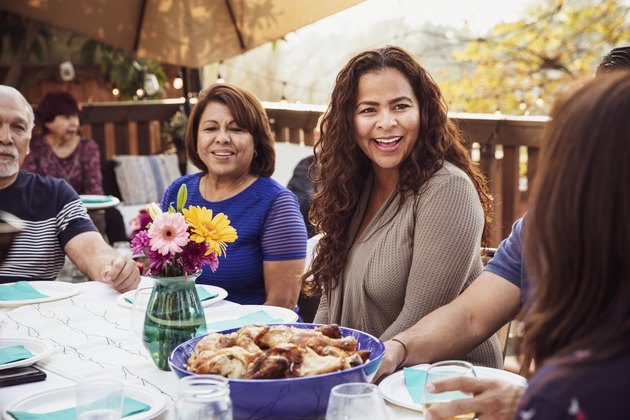
You might only be virtually passing the mashed potatoes and gravy rather than gathering around the same table this year. Still, where there's (indulgent) food involved, there's likely to be talk about body image, eating habits or weight.
Large or small, holiday food gatherings leave the gates wide open for intrusive and often inappropriate comments around the amount of food you're eating (too much or too little), what kinds of food you're eating (dark versus white meat) or even why you're choosing to skip that glass of wine.
问题是,这些选择不是别人的事,而是你自己的事。那么,如何改变话题呢?
If you're feeling anxious going into the holidays, follow these RD-approved recommendations for how to effectively set and communicate your limits on food- and weight-related talk with your tablemates.
1. List Out Your Specific Boundaries
“评估一下您在假期中的需求,并找到满足这些需求的具体方法。”Lauren Cadillac, RDN, dietitian, certified intuitive eating counselor and founder ofFeel Good Nutrition, tells LIVESTRONG.com. "That may mean limits on what topics are even allowed to be discussed with your family."
Maybe you want to steer clear of anything related to dieting, calories or weight. Or perhaps you need to nix any talk about alcohol. Or let's say you just want to avoid any pressure to eat certain foods or stick to food-focused traditions.
Whatever they are, write down your list of needs and share them ahead of time with friends and family in whatever way you feel comfortable (phone call, text, email, etc). Then bring the list with you to your holiday gathering as a reminder for yourself and as something you can show other people if need be.
2. Recruit a 'Food Buddy'
给你最信任的家人或朋友打电话——我们称他们为你的“假日美食伙伴”——他们能满足你的需求,甚至在某些情况下为你撑腰。有后援会强化你的需求和界限,消除你身上所有的压力。
“让他们帮助你改变conversation, make a funny joke or just be a person you can kick under the table or roll your eyes at when someone makes a diet culture comment,"Carolina Guízar, RDN, CDN, dietitian, certified intuitive eating counselor, founder ofEathority和cofounder of拉丁健康集体, tells LIVESTRONG.com.
3. Plan Your Meal
If someone else is doing the cooking, ask about the menu so you can prepare for what your plate might look like and let the host know about any food swaps you'll be making ahead of time.
"If there is not going to be food that an individual likes, bringing a dish would be a great idea," Cadillac says.
For example, if you recently startedeating vegetarian而且知道大多数的菜都是特别重肉的,或者如果你对乳糖不耐受,想要一个不含奶酪的开胃菜,你可以带一道你知道你可以吃的菜。
4. Arm Yourself With a Mantra
Food is there to fuel and nourish our bodies, so we shouldn't feel guilty for one or two days of more indulgent eating or snacking, Guízar says.
如果你真的发现自己身处这样一个地方,你觉得自己的身体受到了批评,或者对自己的饮食感到羞耻,那就花点时间停下来,向内看。有一个肯定-一个积极的短语,你可以重复自己-可以帮助。想想“我应该和食物和我的身体和平共处”
5. Have a Comeback Prepared
If unwelcome comments about food habits or weight crop up, be prepared with thoughtful responses to help direct or even end the conversation in a smooth, diplomatic manner.
Here are a few helpful responses from Cadillac and Guízar that you can keep in your back pocket:
Comment: "Are you really going to eat all that?"
- Response:"Please don't comment on my food. What I eat is none of your business."
评论:“你的体重减轻了/增加了。你现在看起来健康多了。”
- Response:“请不要评论我的体重。这让我很不舒服。”
评论:“你为什么不喝酒/不吃馅饼?”
- Response:"Thank you, but I am just going to stick with [insert other food or beverage] for now."